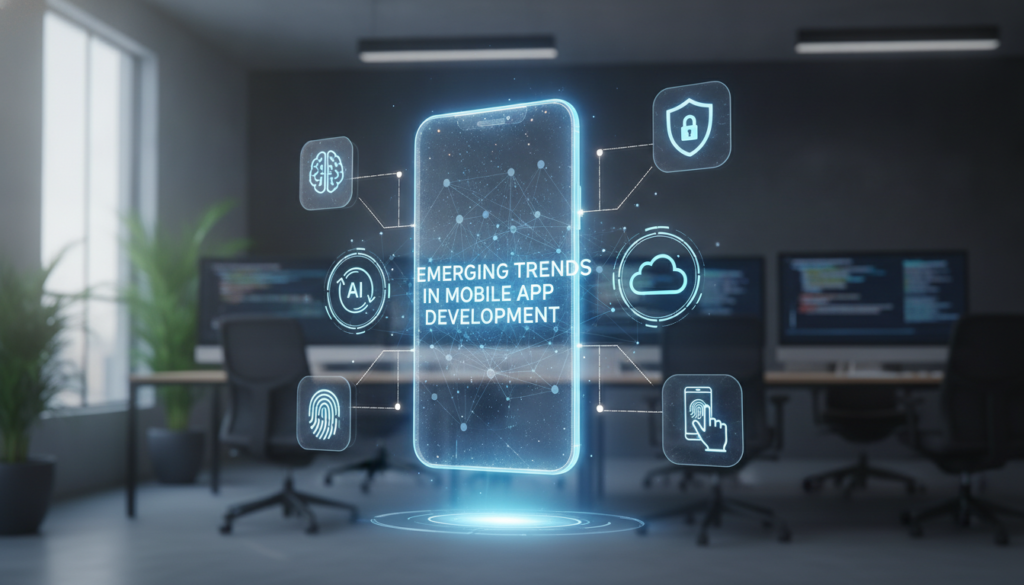
Everything You Need to Know About Emerging Trends in Mobile App Development
In today’s rapidly changing technology landscape, understanding the emerging trends in mobile app development is crucial. As businesses and developers strive to harness the power of mobile applications, numerous trends are shaping how apps are designed, developed, and deployed. This article explores the key trends that are set to influence mobile app development, providing insights and practical examples for businesses and developers alike.
1. The Rise of Artificial Intelligence in Apps
Artificial Intelligence (AI) is becoming a cornerstone of many mobile applications. With the ability to automate features and enhance user experiences, AI is transforming traditional app functionalities.
1.1 Enhancing User Experience with AI
AI algorithms are increasingly used to tailor user experiences based on preferences. For instance, apps can now analyze user behavior, suggesting personalized content or features. This not only boosts engagement but also enhances overall satisfaction.
Examples of AI in mobile apps include virtual shopping assistants and chatbots that provide instant customer support. These technologies make the app more intuitive, allowing users to accomplish tasks more efficiently.
1.2 AI-Driven Analytics for Developers
Developers can leverage AI for predictive analytics, which assists in understanding user behavior and improving app performance. By using AI tools, they can detect issues before they escalate, ensuring a smoother user experience.
Moreover, AI can analyze vast data collections to identify trends that guide development strategies. This data-driven approach is becoming indispensable in refining app features to meet user demands.
2. The Growth of 5G Technology
5G technology is revolutionizing mobile connectivity, offering faster speeds and more reliable connections. As this technology rolls out, it significantly impacts mobile app development and user experiences.
2.1 Faster and More Reliable Connections
With speed increases up to 100 times faster than 4G, 5G enables apps to run smoothly, even under heavy data loads. This is crucial for data-intensive applications like video streaming and augmented reality (AR).
As a result, apps can deliver high-quality multimedia experiences without lag, enhancing user satisfaction and keeping them engaged for longer periods.
2.2 Opportunities for Innovation
5G paves the way for innovative app functionalities, including real-time video conferencing, immersive gaming experiences, and IoT integration. Apps that leverage these capabilities can capture a broader audience and create unique value propositions.
This also allows developers to experiment with new features that weren’t feasible with previous technologies, leading to exciting developments in mobile applications.
3. Increasing Adoption of IoT
The Internet of Things (IoT) is bridging the gap between various devices, creating a connected ecosystem. Mobile applications play a vital role in integrating IoT devices, providing users with a seamless experience.
3.1 Integrating Multiple Devices
Mobile apps are essential for managing IoT devices, allowing users to monitor and control systems from their smartphones. For example, smart home apps enable users to control lighting, heating, and security systems remotely.
This interconnectedness not only enhances convenience but also provides users with actionable insights to improve their home or business efficiency.
3.2 The Impact on User Experience
As IoT devices proliferate, the demand for user-friendly mobile apps that integrate seamlessly with these devices increases. Users expect a unified experience, pushing developers to focus on intuitive interfaces and efficiency.
Additionally, IoT technology allows for automation, letting users set up routines that enhance their daily lives, demonstrating the potential for apps to offer solutions that simplify tasks.
4. Advancements in Augmented and Virtual Reality
Augmented Reality (AR) and Virtual Reality (VR) are rapidly expanding within mobile applications. These technologies enhance user interaction and engagement by immersing users in unique experiences.
4.1 Enhanced User Engagement
AR applications, such as those used in retail, allow users to visualize products in their environment, thus bridging the gap between physical and digital shopping experiences. This increases user engagement and can significantly boost sales.
Conversely, VR applications offer fully immersive experiences, such as virtual tours or training simulations, providing users with interactive opportunities that traditional apps cannot match.
4.2 Training and Development Applications
In business contexts, companies are utilizing VR for training programs, offering employees a safe space to develop skills in simulated environments. This practical application can lead to better retention and understanding.
Using AR for interactive learning further enables education and skill development, making it a valuable tool for various sectors.
5. Focus on App Security
As mobile applications handle sensitive user data, security has become a top priority in app development. Users are increasingly aware of their privacy, making security a significant aspect of app design.
5.1 Implementing Best Security Practices
Developers must adopt industry-standard security practices to safeguard data. This includes using encryption, secure APIs, and thorough testing to identify vulnerabilities.
Additionally, regular updates to address security flaws are essential for maintaining user trust and ensuring compliance with data protection regulations.
5.2 Educating Users on Security
Developers can enhance user security awareness through educational resources within the app, helping users understand best practices and encouraging them to secure their data.
Providing tips on creating strong passwords and recognizing phishing attempts can go a long way in promoting a responsible user-base.
6. Cross-Platform Development
Cross-platform development is gaining traction, allowing developers to create applications that run seamlessly on various devices. This approach reduces time and resource investment.
6.1 Cost-Effective Solutions
By using frameworks such as React Native or Flutter, developers can write code once and deploy it across multiple platforms. This significantly cuts down on development time and costs.
Furthermore, it ensures a consistent user experience across devices, which is crucial for maintaining brand integrity and user satisfaction.
6.2 Future of Mobile Development
The shift to cross-platform solutions is expected to continue, as more businesses look for efficient and effective ways to reach a wider audience. This trend reflects the demand for flexibility in app usage.
As technology evolves, cross-platform frameworks will likely become more robust, supporting new functionalities that cater to user needs.
Frequently Asked Questions
What are the emerging trends in mobile app development?
Emerging trends in mobile app development include the rise of AI, 5G technology, IoT integration, AR and VR advancements, heightened security focus, and cross-platform development.
How is AI used in mobile apps?
AI enhances mobile apps by personalizing user experiences, automating tasks, and providing predictive analytics to developers for improved functionality.
What impact does 5G have on mobile development?
5G provides faster speeds and more reliable connectivity, enabling data-intensive applications and innovative features like real-time interactions.
How can I improve my app’s security?
To improve app security, implement encryption, secure APIs, and conduct regular testing and updates to address vulnerabilities.
Why is cross-platform development becoming popular?
Cross-platform development is popular due to its cost-effectiveness and ability to create apps that provide consistent experiences across multiple devices.
What role does IoT play in mobile apps?
IoT connects devices, allowing mobile apps to manage and monitor various systems, enhancing user convenience and interactivity.
Conclusion
The landscape of mobile app development is ever-evolving, driven by technological advancements and shifting user expectations. By staying informed about emerging trends like AI, 5G, IoT, and security practices, developers can create innovative applications that cater to today’s needs. Embracing these trends will not only enhance user experiences but also position businesses for future growth in the competitive mobile app market.
By understanding and adopting these changes, businesses can remain competitive and leverage new opportunities as they arise.